


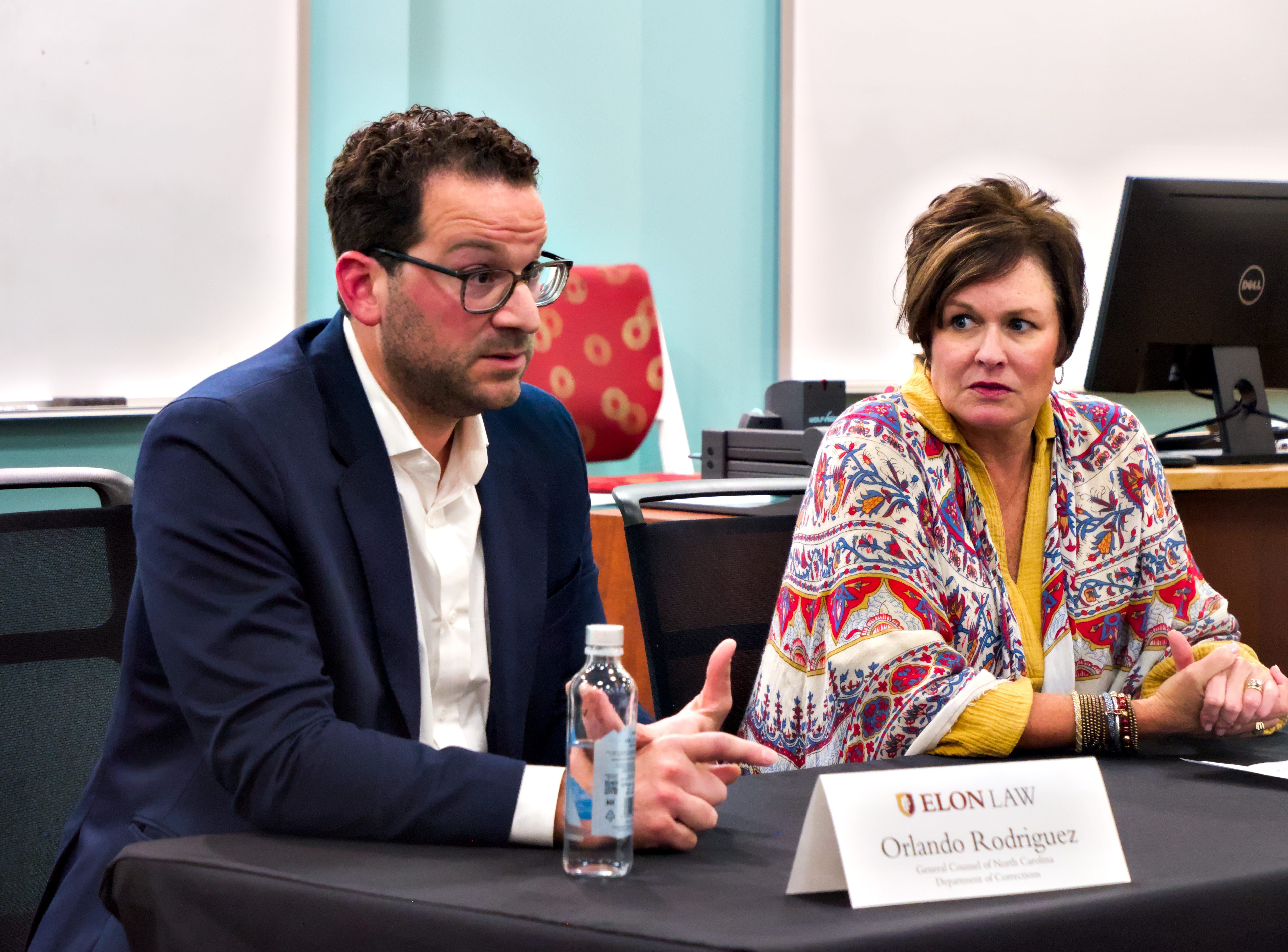
Legal professionals discussed the obligations, constraints and challenges facing state prisons during an event hosted by We the People – Elon Law's Constitutional Law Journal.
The constitutional rights of incarcerated individuals and the challenges of managing state prisons were the focus of a recent panel discussion hosted by We the People – Elon University School of Law’s Constitutional Law Journal.
Orlando Rodriguez, general counsel for the North Carolina Department of Adult Correction, and Anne Precythe, former director of the Missouri Department of Corrections, shared perspectives from their careers in corrections administration. Nicolas D’Amelio, editor-in-chief of We the People, moderated the discussion.
Rodriguez outlined the First Amendment protections afforded to incarcerated individuals, including religious practices, communication and protections against retaliation. He also addressed Eighth Amendment requirements concerning prison conditions and the treatment of those in custody.
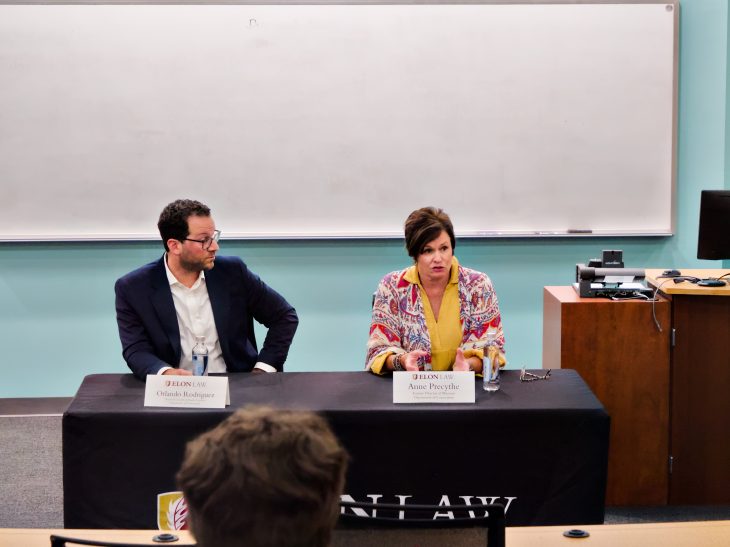
Meeting those constitutional obligations can prove difficult amid staffing shortages and limited budgets. Rodriguez noted that North Carolina’s corrections system faces significant staffing challenges, complicating everything from facility safety to accommodating group religious worship.
Precythe described how improving employee morale and communication became priorities when she took charge of Missouri’s corrections department, where only 3% of employees reported job satisfaction. Her efforts to improve workplace culture coincided with a significant reduction in lawsuits against the department.
Both speakers emphasized that constitutional obligations remain regardless of budgetary constraints and encouraged students to visit correctional facilities to better understand their operations.
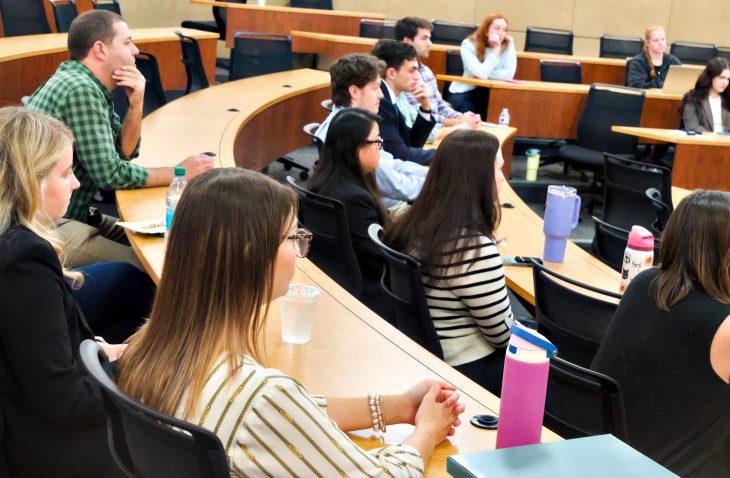
“We chose the topic because the corrections system is going to be in the background — and even foreground — of a lot of our careers, whether in criminal defense, prosecution, the Department of Justice or civil rights advocacy,” D’Amelio said. “This was a really great opportunity to hear from people who have been in the thick of it for years or even decades. Not only did we get to learn about how extensively the constitution affects the corrections system on an ongoing basis, but also about other challenges to management and reform of the system, some of which lie at the legislative level.”
Founded in 2022, We the People – Elon Law’s Constitutional Law Journal is a student-run online publication dedicated to advancing legal scholarship and fostering thoughtful discussion of constitutional law and related issues. The journal seeks to encourage fair, respectful and politically neutral dialogue on contemporary legal questions.